
What is a toe spring? And does it matter?

If you look at most shoes, especially conventional running shoes and sneakers, you’ll notice that they curve upward at the toe. This curve is called a toe spring.
How Toe Spring Works
- In shoes with a toe spring, the toes are held slightly dorsiflexed — meaning they’re closer to your shin angle even when standing. This reduces how much the toes and front of the foot have to bend during walking or propulsion.
- Toe springs were originally added to compensate for stiff soles that don’t bend easily at the forefoot. The spring helps the shoe “rock” forward as you roll through a step.

Why Toe Spring Affects Natural Foot Function
But as a Harvard evolutionary biologist found out, making things on our feet isn’t necessarily a good thing.
In this study published in Nature, the researchers observed the foot muscles working less when wearing shoes with a toe spring— especially in walking. Specifically, the toe spring alters foot joint mechanics so that less work is done by the intrinsic foot muscles during push-off.
This is a classic case of when you don’t use it, you lose it. Over time, the foot muscles weaken because they’re not being used as much, and may contribute to common and painful foot problems like plantar fasciitis and reduced foot stability as other parts of our foot start to compensate for the weakened muscles.
Barefoot Shoes have No Toe Spring for Stronger Feet
If you want strong, healthy feet, it’s better to opt for a flat, flexible shoes with no toe spring. The Barefoot Shoe Guide is full of healthy barefoot shoes that do not have a stiff toe spring (note that occasionally I share a transitional barefoot shoe like in this post on the best barefoot shoes for beginners that do include a slight toe spring, but I’ll note it).
The term barefoot is referring to how the shoe lets us walk, like when we are barefoot. This means no crutch like a toe spring to help us walk. In a barefoot shoe, you’re going to have to rely on your own foot muscles. But, that mean’s you’re much more likely to have healthy, pain-free feet.

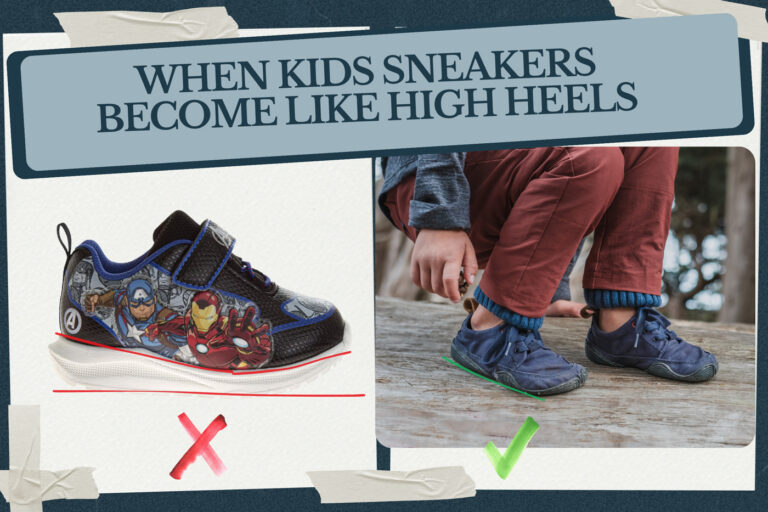
After some wear, even a completely flat barefoot shoe will start to curve up slightly due to the repeated bending occurring at the toes from walking. Some of my most barefoot shoes, like Wildlings or Vivobarefoot with very thin soles still a very slight curve to prevent the front from catching, and from the repeated bending from walking. The issue lies when the shoe overall is very stiff and the toe spring is both stiff and significant such that when standing flat, the toes are still pulled upward.
So Why Have Toe Spring at All?
If toe spring isn’t great for everyday foot strength, why do so many athletic shoes still have it?
Because once you add a thick, cushioned sole, you almost have to.
1. It Helps the Shoe Roll Forward
Modern performance shoes — especially ones with thick midsoles or stiff plates — don’t bend easily at the forefoot. When a sole can’t flex, something has to help you transition through your stride.
That’s where toe spring comes in.
It essentially helps the shoe “rock” forward so you don’t have to rely entirely on natural toe flexion. In a stiff, high-stack shoe, that upward curve becomes part of the rolling mechanism.
Without it, the shoe would feel clunky and awkward.
2. It Can Reduce Stress in Certain Running Conditions
Some biomechanical studies using finite-element modeling suggest that higher toe spring can reduce peak stress on certain structures — like the metatarsals and the big toe — particularly during forefoot running in stiff shoes.
That doesn’t mean toe spring is inherently protective. It means that when you’ve already added stiffness and stack height, toe spring may help offset some of the mechanical consequences of that design.
In other words, it’s compensating for the shoe — not improving on natural foot function.
The Necessary Trade-Off
You’ll notice something interesting: Any wide toe box shoe that also has a lot of cushion almost always has toe spring. It wouldn’t function very well without it.
Once you increase stack height and reduce flexibility, toe spring becomes a bit of a necessary evil. It allows a stiff shoe to move forward smoothly.
You’ll see this in brands like Altra, Topo Athletic, and Flux Footwear — all of which make foot-shaped shoes, but still incorporate noticeable toe spring in their higher-cushion models.
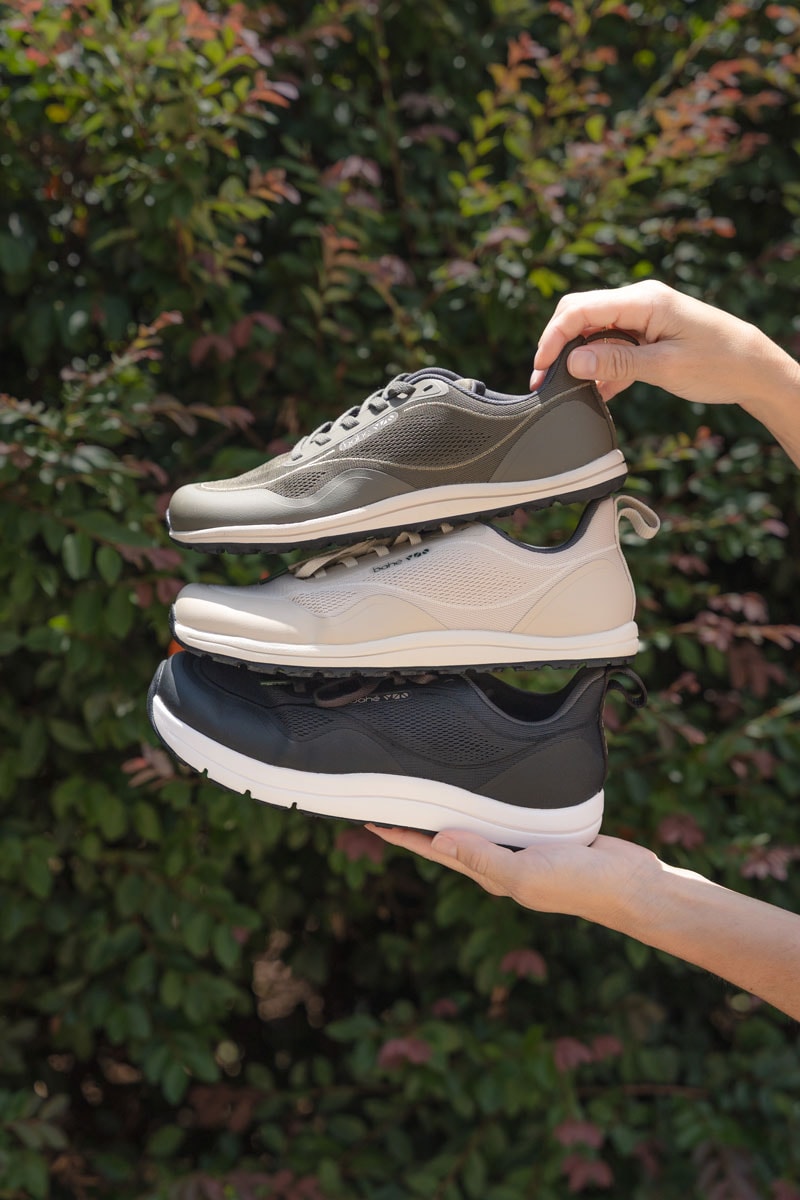
A good example of the need for toe spring in higher cushioned models is the Bahé Revive Endurance. The two lower-cushion models in the Modes line have minimal toe spring. But once you get to the highest stack height (22mm) in the Revive Endurance — designed for longer distance running — the sole is thicker and stiffer. It simply needs more toe spring to function properly.
That’s the trade-off.
More cushion and stiffness can mean:
- Smoother roll at faster paces
- Potential reduction in localized stress in a rigid shoe
- Greater comfort for longer efforts
But it also usually means:
- Less intrinsic foot engagement
- Reduced natural toe flexion
- More reliance on shoe mechanics over foot mechanics
For walking and everyday wear, I still don’t recommend toe spring.
For performance running, it becomes more of a design compromise — balancing speed, protection, and efficiency against long-term foot strength. You get to pick your poison and decide what’s most important to you.
For further reading, see the article “Your Shoes were made for walking. And that may be the problem” in The Harvard Gazette.
For more frequently asked questions about barefoot shoes, see the FAQ page.




One Comment