Why Are We Putting Kids in High Heels? A Look at Children’s Sneakers and What the Research Says
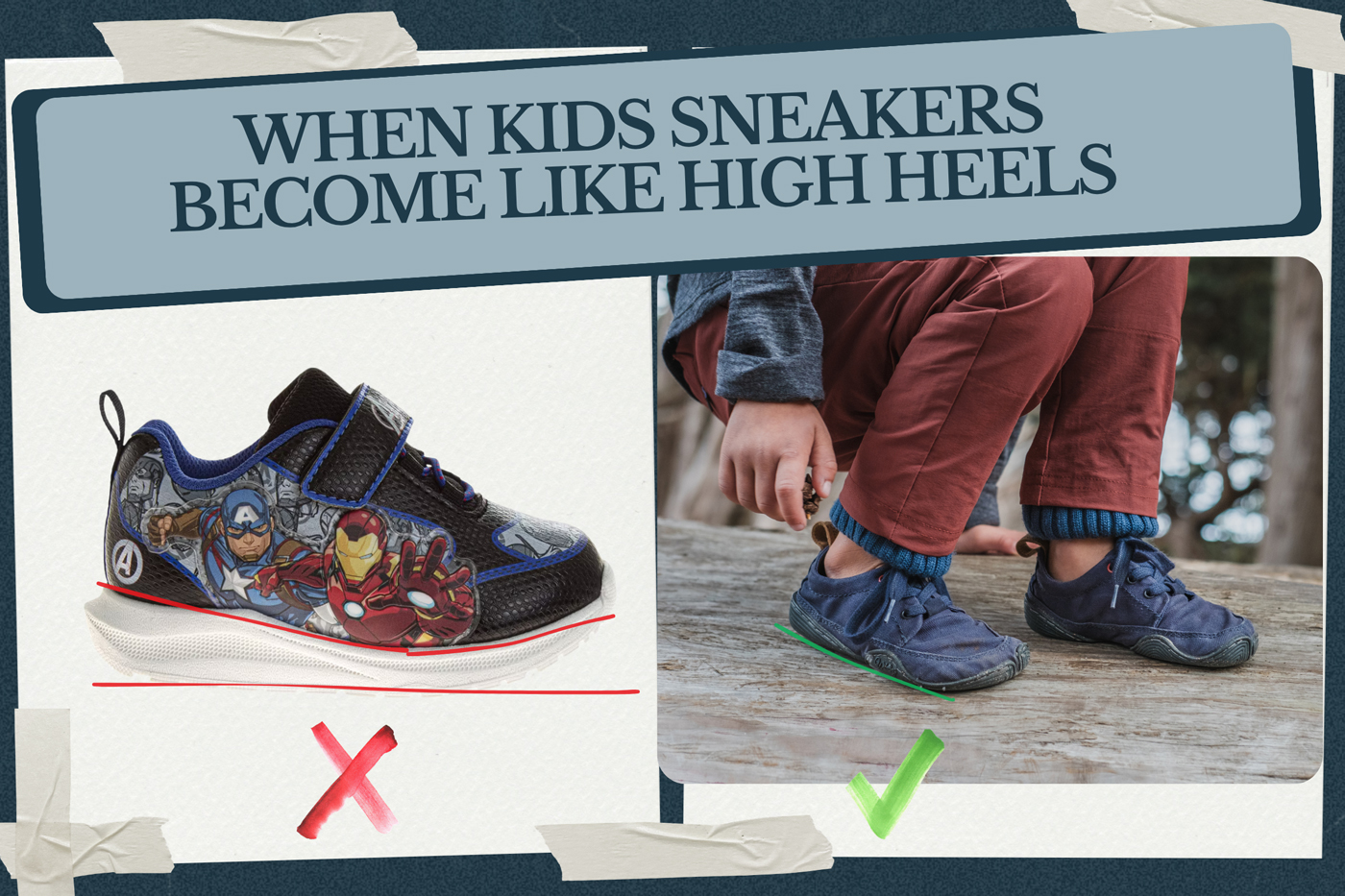
If I told you most kids’ sneakers at most major retailers are basically high heels, you’d probably say I was being dramatic.
I’m not.
I recently walked through the kids’ shoe aisle at Target and started measuring heel-to-toe drops on their sneakers. We’re talking 10mm drops — on kids that are only a few feet tall. Thick wedges of foam stacked under the heel, rigid soles, and narrow toe boxes. These are the shoes adorned with Barbie, Bluey, and unicorns…they have twinkling lights and bright colors, made just so a kid begs for them.
And most parents say yes, because who doesn’t want a shoe that their kids would put on willingly? And to be fair, why would parents question them? They’re sold as sneakers. They look like sneakers (at least if you’ve been desensitized by mainstream footwear for decades).
But when you actually look at how they’re built, they have more in common with a dress shoe than anything a kid should be playing in (and technically, should anyone be wearing dress shoes like that?).
What Is Heel-to-Toe Drop and Why Does It Matter?
If you’re new here, heel-to-toe drop (or just “heel drop”) is the difference in height between the heel of the shoe and the forefoot. A shoe with a 12mm drop means the heel sits 12mm higher than the ball of the foot. A zero-drop shoe means the heel and forefoot are level, the way your foot naturally sits on the ground when you’re barefoot.
When you raise the heel, even by what sounds like a small amount, it shifts the body’s weight forward. In adults, this has been well-studied; it increases lumbar lordosis (the inward curve of the lower back), changes knee alignment, and forces the muscles of the lower leg to compensate in ways they weren’t designed to.
Now imagine that same thing happening in a body that’s still growing. A body where the bones are softer and more malleable, the arch is still forming, and the neuromuscular system is still learning how to balance and move efficiently.
That’s what we’re doing to kids every time we lace up a pair of conventional sneakers with a heel drop.
What the Research Actually Says
This isn’t just a barefoot shoe enthusiast’s opinion. There’s a growing body of research that supports what many of us in this space have been saying for years.
Conventional Shoes Alter How Kids Move
A systematic review and meta-analysis published in the Journal of Foot and Ankle Research (Wegener et al., 2011) looked at the biomechanical effects of shoes on children during walking and running. The findings were pretty clear: conventional footwear significantly altered children’s gait — reducing natural foot motion, increasing the percentage of rear-foot strike patterns, and changing movement at the ankle and knee (PubMed Central). The review also found that shoes can act like a sensory filter, dampening proprioception (your body’s natural awareness of movement and position). When you lose some of that feedback, your gait can subtly change as your body works to regain stability (PubMed Central).
In plain English: the shoe is overriding how a kid’s body naturally wants to move. And the thicker and stiffer the shoe, the more interference you’re introducing.
A separate study by Wolf et al. (2008) compared barefoot walking to walking in conventional and flexible children’s shoes. They found that slimmer, more flexible shoes didn’t change foot motion nearly as much as conventional shoes, and recommended flexible footwear for healthy children in general (PubMed).
Raised Heels Change Posture — Especially in Developing Bodies
While most heel-height research has focused on adult women in high heels, the principles apply to any raised heel. A raised heel tips the pelvis forward, increases the curve in the lower back, and forces compensations up the entire kinetic chain.
One study on adolescents found that frequent use of footwear with a heel drop contributed to postural issues including forward head posture, increased lumbar lordosis, pelvic anteversion, and knee valgus, and had a negative impact on motor development (Tnchiro).
Children’s bones don’t fully harden until around age 10, and the arch of the foot isn’t fully formed until roughly age 6-8. That means the forces acting on a child’s foot during these years aren’t just affecting movement patterns — they can actually shape the structure of the foot itself. Many adult foot problems can be traced back to the shoes children wear before age 10, when their bones are still malleable (Rossi).
That’s a sobering thought when you consider what’s sitting on the shelves of every major shoe retailer.
Minimalist Shoes Build Stronger Feet and Better Balance
On the flip side, the research on minimalist footwear in children is encouraging.
A 2022 randomized controlled trial from the University of Sydney (Quinlan et al.) assigned 70 children aged 9-12 to wear either standard school shoes or minimalist shoes for nine months. The results: Children who wore the minimalist shoes showed improved semi-dynamic balance compared to the control group. The study also found that toe flexor strength was correlated with better balance and jump distance (ScienceDirect).
The researchers specifically recommended moderate minimalist school shoes for children.
And it’s not just kids. A study published in Scientific Reports found that foot strength increased by an average of 57% after just six months of daily activity in minimal footwear (Nature). The same study noted that habitually barefoot populations tend to have wider feet and higher arch development compared to those who grew up in conventional shoes (PubMed Central).
Research from the German Sport University Cologne similarly found that children who regularly wore minimalist footwear developed stronger foot muscles and better balance compared to those in conventional shoes (Juliana Lucky).
The pattern is consistent: less shoe means stronger, more capable feet.
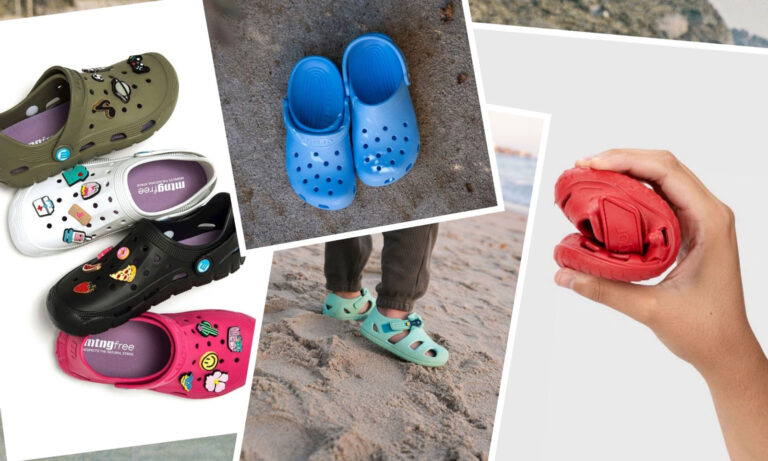
Check out our favorite barefoot shoes for kids here.
So What Should You Look For in Kids’ Shoes?
If you’re a parent reading this and feeling a little frustrated — I get it. The shoe industry doesn’t make this easy. The vast majority of kids’ shoes on the market, even the ones marketed as “athletic” or “performance” shoes, fail the most basic tests for healthy footwear.
Here’s what to look for:
Zero drop. The heel and forefoot should be at the same height. No wedge, no platform, no hidden heel lift inside the insole (yes, that’s a thing — many shoes that look flat have a built-up insole with extra heel cushioning).
Flexible sole. Pick up the shoe and try to bend it in half at the ball of the foot. If it barely moves, it’s too stiff. A flexible sole lets the foot move through its natural range of motion, which strengthens muscles and supports arch development.
Wide toe box. Kids’ toes need room to spread and grip. A narrow, tapered toe box pushes toes together and can lead to alignment issues even in young children. The shoe should be at least as wide as your kid’s foot at the widest point.
Lightweight. Heavy shoes force a child to work harder with every step and reduce the natural feedback their feet get from the ground.
Minimal cushion. I know this one feels counterintuitive, but kids don’t need a brick of foam under their feet. Excessive cushioning dulls proprioception (the body’s ability to sense where it is in space) and weakens the intrinsic muscles of the foot over time.
The Bottom Line
We wouldn’t put a kid’s hand in a thick, rigid glove and expect them to develop fine motor skills. But that’s essentially what we’re doing with their feet every time we put them in conventional sneakers.
Kids’ feet are designed to move — to bend, flex, grip, and feel the ground beneath them. Every millimeter of unnecessary heel drop and every layer of excessive cushion works against that design.
The good news? You don’t need to spend a fortune to make a change. There are more barefoot-friendly kids’ shoe options available now than ever before. And simply being aware of what to avoid, including raised heels, stiff soles, narrow toe boxes, can help you choose the best option for your child.
Your kid’s feet are building the foundation for the rest of their body. Let’s help them build the healthiest foundation possible with better (barefoot) shoes.